

The internet has proven to be an integral part of daily life; an excellent WiFi system always goes hand-in-hand with it. In the quest for better WiFi performance, the mesh WiFi system is a new full-coverage solution attracting attention. Mesh WiFi feels like an evolutionary step forward in enthroning robust WiFi streaming and scrapping dead spots.
With features that tether routers together and share data smartly over wide body usage, it is hyped to metamorph into a comforting step forward for Wi-Fi networking. With mesh WiFi, the household reception of Duo 4K streaming in the dead of night or office-time video conferencing is at ease.
Understanding its details is our industry's welcome stance on pushing technology envelopes. After all, a survey sooner would give you the egging fill you constantly desired from your WiFi!
What is a mesh WiFi system?
Mesh WiFi is a network system that comprises various compact router pods or nodes interconnected to each other. This composition replaces the need for a single primary router, instead enforcing broad-scale internet coverage in large areas.
Differences between a Regular Router and a Mesh WiFi System
Contrastingly, a mesh WiFi system shines in its emission from a traditional router perched in one corner, distributing WiFi signals. While the solitary router might fail to provide extended coverage, the mesh WiFi ensures comprehensive coverage through its distinctive node setup.
- Single router: strong signals where it's placed but weakening as you move further; generally covers smaller areas
- Mesh WiFi System: This doesn't drop the WiFi radiation level as you walk through the house or an area. It provides concertedly intense WiFi exposure, perfect for unrestricted streaming and downloading.
Workings of a Mesh WiFi System
The vertices of a mesh WiFi system pertain to the individual nodes or pods. Either wired or individually placed throughout the house, these nodes link up together to stretch an intense flood of internet coverage over a larger area. In essence, mesh WiFi disperses the internet seamlessly, ensuring dead spots are a thing of the past. It further thrives with the ability to permit advancing data to the part nearest to the target device, an intelligent attribute absent in conventional systems.
Importance of Mesh WiFi in Larger Households or Offices
Strained connectivity, typically surprising in hard-to-reach corners or expansive premises, can be aptly tackled by mesh WiFi. This integrated and adaptive internet system should greatly benefit large, crowded architectural spaces, outdoor extremities, and multiple-story domiciliary designs.
Real-time examples include 4K streaming, large file downloads, uploads, or video conferencing; this setup works flawlessly with these bandwidth-swallowing uses despite the house's or space's lengths and wraps.
Tips for Improving WiFi Redundancies
WiFi redundancies can lead to significant interruptions, affecting everything from your ability to work remotely to leisure activities like streaming. This blog post sheds light on innovative methods to improve WiFi redundancies, ensuring signals are robust, secure, and reliable.
Evaluate your current WiFi infrastructure.
Begin by analyzing your existing Wi-Fi infrastructure, including router positions, interference from other devices, and total connected devices. Conduct a WiFi signal strength test across all areas to understand high-risk drop zones.
Select dual or multiple routers.
Having just one router can overwhelm the services when too many devices are hooked to WiFi. As a preventative measure, implementing dual-beloved or multi-router networks is beneficial.
Devise a redundancy plan.
Always have a backup plan to ensure business continuity in case of a primary WiFi failure. This can minimally come as a secondary internet connection ready to take within moments of primary internet failure.
Regular maintenance and updates
Continued inspection and maintenance allow you to detect potential problems early, update firmware for better compatibility and increased efficiency, and speed up your networks.
Helping to Eliminate Dead Zones
Everyone has experienced spots where the Wi-Fi signal is weaker or nonexistent in their house. These are known as 'dead zones' and can be exasperatingly disruptive. One of the significant advantages of mesh WiFi systems is that they efficiently cover your entire house and virtually eliminate dreaded Wi-Fi dead zones.
Improved Bandwidth for Multiple Devices
A mesh WiFi system can ensure that all devices simultaneously maintain optimal speeds for households or workplaces connected to the Wi-Fi network. This is accomplished due to the simultaneous transmission offered by each node in the network, which can easily handle more significant capacity requirements.
Easy management and setup
Many Mesh Wi-Fi systems have user-friendly applications that help in seamless installation and remote management. Features like parental controls, guest networks, or device prioritization can often be customized at the touch of a button.
Top 5 Best Mesh WiFi System 2023
01. Google Nest WiFi
 |
| Photo: Amazon.com |
Google has set remarkable mesh WiFi system development standards as a tech giant. The Google Nest WiFi offers superior performance with an easy-to-use tech interface. Users prefer it for its excellent speed and range, integrating parental controls easily, and uniquely merging smart speaker capability. Google Nest WiFi governs the mesh WiFi community with its dominant attributes.
Features and Specifications
- The Google Nest WiFi is one of the latest offerings by Google in WiFi mesh systems, succeeding the Google WiFi.
- The system promises faster speeds, a highly efficient Google Assistant, and an appealing design matching any modern home's aesthetics.
- Particularly, it is a dual-band system with a singular 2x2 antenna for both bands. It incorporates WPA3 beamforming and supports both manual and automatic band steering.
Setup and user-friendliness
- The setup and usage experience are amicable since the Google Home App is used to configure and control the system.
- Once the app identifies the system in the network, it guides the user through an illustrative setup process via immediate instructions.
- Moreover, managing routines, checking traffic conditioning, or setting operational hours is as simple as possible.
- Performance Review (Speed and Coverage Range) The Google Nest WiFi provides quotable speed and expansive coverage.
- A single unit is considered to reliably cover up to 2200 square feet, with a WiFi 5 user getting a good 550 Mbps in direct roaming proximity to the main router and around 200 Mbps 1-2 rooms away.
Price Evaluation
- Considering the brilliant performance, user-friendliness, and attractive upgrades, Google Nest WiFi is highly competitive in its price.
- A single home pack is available for around 169 USD. At the same time, a duo or trio bundle with one or two extra routers or Wi-Fi access starts at 269 and 349 USD, respectively.
- Customer favorite for its aesthetically pleasing design and tremendously long-range WiFi.
- Facilitation of creating guest networks and parental controls is planned appropriately.
- A drawback would be missing Wi-Fi 6 capabilities with dependency on dual-band. The lack of integrated Ethernet ports on mesh points is also a concern.
When analyzing quality, Google Nest WiFi is without doubt a worthy addition. Its comprehensible features, setup, price, and revolutions make it a prominent mesh Wi-Fi system. It's a bridge between premium and affordable, designed paradoxically to meet cosh comfort and managed connectivity essentials. Absolute pros and cons judgment would consequently circle individual institutes' prerequisites and expense plans. Stay tuned to our website for the top four mesh Wi-Fi systems in line!
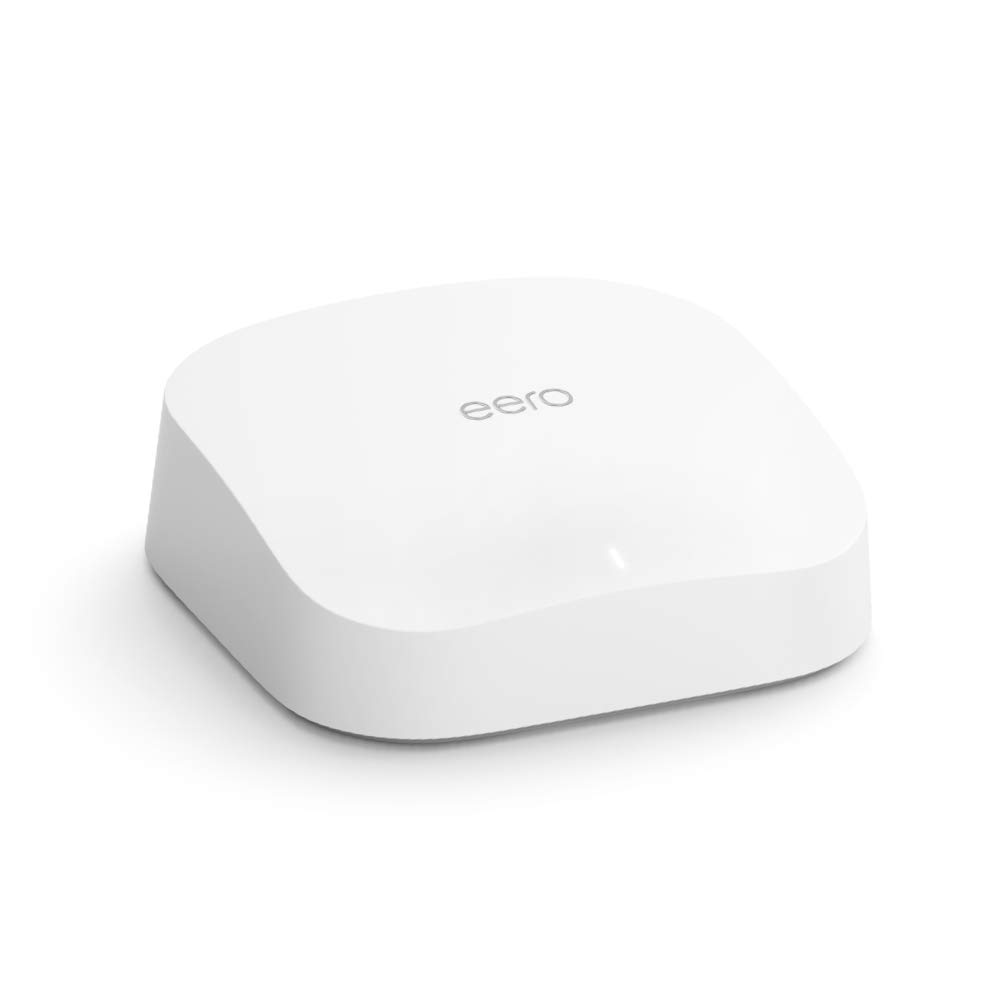
02. Eero Pro Mesh WiFi System Review
 |
| Photo: Amazon.com |
The Eero Pro Mesh WiFi system is known for delivering muscular signal strength. It ticks all the boxes for an ideal home network system. The Eero Pro sets up quickly, provides seamless coverage through multiple walls, and allows easy network customization through a user-friendly mobile application. Mesh WiFi systems rapidly replace conventional home routers due to their gigantic internet coverage range and extraordinary speed. Today, we briefly summarize the popular Eero Pro Mesh WiFi System.
Product Specifications and Features
The Amazon-owned Eero Pro Mesh WiFi system boasts three euros and covers up to 6,000 sq. ft. Its sleek and compact design is distinctively attractive. The most striking feature, however, that sets the Eero Pro Mesh WiFi System apart from its competitors is the TrueMesh technology, which ensures seamless internet coverage.
- Tri-band WiFi radios, simultaneous 2.4 GHz, 5.2 GHz, and 5.8 GHz wireless
- 2 auto-sensing Gigabit ports for WAN and/or LAN connectivity
- 700 MHz quad-core processor, 512 MB RAM, 4GB flash storage
Setup and User-Friendliness
One of the key factors contributing to the growing popularity of the Eero Pro system is its ease of operation, supported by a companion mobile app. This directional app requires 10 minutes to set up this mesh system, making it purpose-built for all.
Performance Review
The TrueMesh technology ensures podium-ranking download and upload speeds. Moreover, it enhances robust, reliable WiFi connectivity, irrespective of the burden.
Additional attributes, such as the 40-foot coverage range, with or without obstructions, make it the unanimous choice among users.
Multiple simultaneous connections or beamforming aid in creating more efficient network paths, upscaling overall performance bounds.
Price Evaluation
Unarguably, the Eero Pro Mesh WiFi System is one of the pricier options available on the market. With robust security tools like Eero Secure features and extended warranties, Eero Pro validates its price tag with matchless services.
Pros and cons
- Pros: high-quality performance; Strong, blanket-like internet coverage; simple setup
- Cons: Priced at a higher end - Drive for add-on services may bother some users; - may require frequent updates
Whether working from home, online gaming, or streaming multimedia, in most scenarios, the Eero Pro Mesh WiFi system's overall user-friendliness, coverage, and high-speed trait make it stand out from conventional WiFi systems. Despite the associated add-on service pushes and the premium price tag, it resolves most digital discomfort effectively and makes it a worthy contender in the mesh Internet systems market.
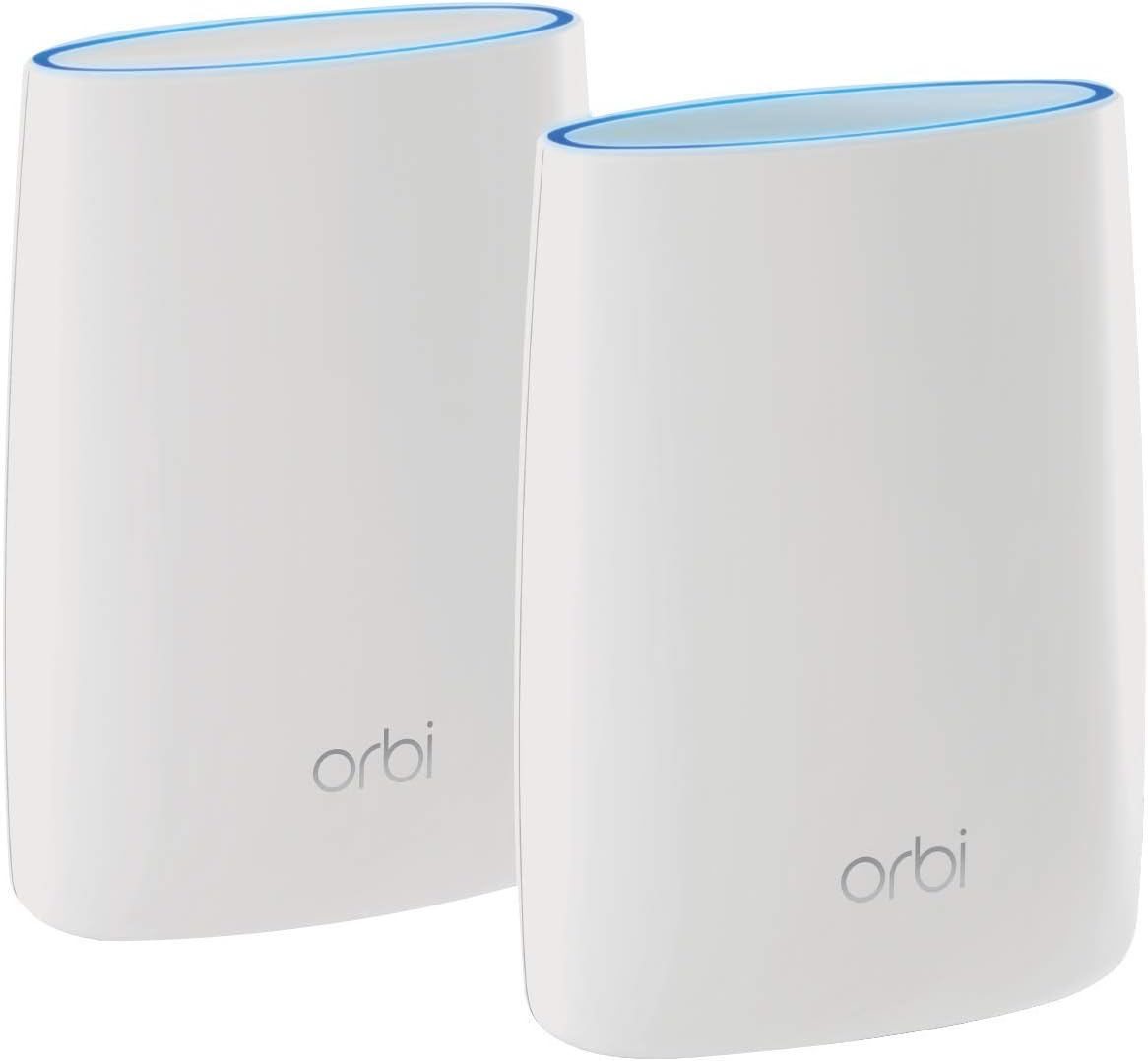
03. Netgear Orbi WiFi System
 |
| Photo: Amazon.com |
WiFi systems are a household necessity in an era where connectivity is vital. ISPs might provide us with routers, but a powerful, efficient WiFi system like Netgear Orbi WiFi can change the game. As part of our Top 5 Mesh WiFi Systems series, we look at the Netgear Orbi WiFi System today.
System Overview: Netgear Orbi WiFi System
A product of a renowned company, Netgear, the Orbi WiFi System stands out for delivering seamless wireless connectivity with an extensive coverage area. Here, we dive deeper into the features, setup process, performance, pricing, and the pros and cons of this system.
Features and Specifications
The Netgear Orbi WiFi System has some unique features and functionalities that distinguish it from other routers:
- Mesh technology servicing: Provides a secure, interconnected network while eliminating dead zones.
- Smooth roaming: Consistently maintains your connection as you move around the house.
- Deco M9 Plus (for larger homes): Wide-reaching WiFi coverage of up to 5,500 square feet can extend to many rooms.
Setup and User-Friendliness
The Netgear Orbi WiFi is renowned for its simple three-step setup process:
- Plug the system
- Set the system up through the Netgear Orbi app.
- Connect your devices
With a user-friendly system, managing and controlling the network via the app is effortless.
Performance Review
Proficient in both speed and coverage spectrums, the orbit's performance is impressive.
- Superfast WiFi speeds up to 3.0 Gbps
- Can host connections of around 25 devices simultaneously without any hiccups.
Price Evaluation
The price for the Orbi WiFi System may be higher than average routers. However, the features and performance make up for the extra investment. Online, the basic version has a standard price of around $187.
Pros and cons
Like everything in life, here are the pros and cons we have identified with the Netgear Orbi WiFi System:
Pros:
- Outstanding WiFi speed
- Broad WiFi coverage
- Smooth, uninterrupted connection and roaming
Cons:
- The size of each unit could be slightly bulky for some users.
- The price may be on the steeper side.
If you desire a mesh WiFi system with premium functionality, the Netgear Orbi WiFi System can be a top contender. From harnessing incredible speed to ensuring extensive coverage, the importance of a reliable, seamless wireless connection cannot be understated in the dynamic digital landscape of today's world. Even though its price is higher than its competitors, the pros heavily outweigh the cons.
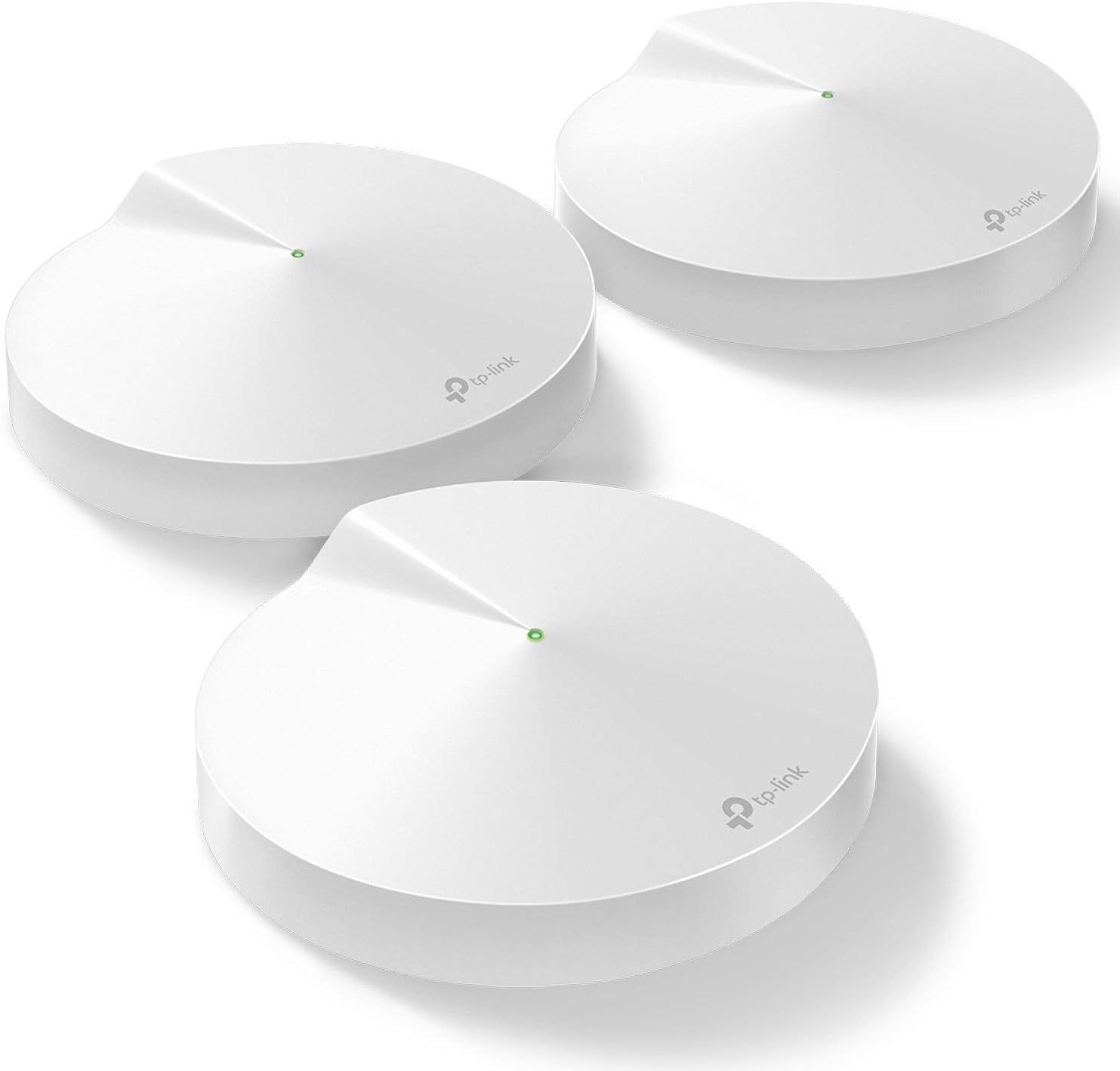
04. TP-Link Deco Mesh WiFi System
 |
| Photo: Amazon.com |
TP-Link Deco excels at providing a reliable network connection over long-range distances. The Deco line of products offers easy setup, compatibility with Amazon Alexa, robust parental controls, and security features, making it an excellent choice.
The TP-Link Deco Mesh WiFi System ranks fourth in our comparison. An elegantly designed system, it prides itself on high efficacy, extended WiFi coverage, and an excellent user experience.
Features and Specifications
The TP-Link Deco Mesh WiFi System adopts a robust technology base featuring several remarkable specifications:
- Enhanced WiFi Coverage: high-powered antennas with coverage up to 5,500 square feet, ensuring no more dead zones in the house.
- Seamless Roaming: Cross-device seamless networking for smooth, uninterrupted connections.
- High-capacity networking connects over 100 devices, enabling a seamless smart home experience.
- Parental Control: Ability to manage content and filter websites for improved internet safety.
Setup and User-Friendliness
Setting up a mesh WiFi system might seem daunting, but the TP-Link Deco makes it simple. In the following, we consider its user-friendliness:
- Straightforward App Setup: Guided instructions on the Deco app allow easy installation.
- Beautiful Design: The cylindrical design of the Deco devices makes them discreet and blend effortlessly into the home decor.
- Quality of Service (quality of service): Greens a user-friendly mechanics to prioritize devices to access faster internet.
- Remote Management: Lets users manage and set up a WiFi connection using the Deco app to alternate locations not bound by a global area.
Performance Review (Speed and Coverage Range)
In terms of performance, the TP-Link Deco Mesh WiFi system doesn't disappoint. Despite being ranked fourth in our overview, it's worth mentioning that it offers almost the same degree of reliability as class leaders, providing reliable signal strength and efficient speed even at distant locations from the router, leading to minimal latency or loss of signal.
Price Evaluation
The TP-link Deco Mesh WiFi System is priced under many high-end competitors, comfortably in the mid-price range. It promises a complex value proposition because of its formidable list of features compared to pricing.
Pros and cons
As with any system, the TP-Link Deco Mesh WiFi System has its pros and cons:
- Pros: wide coverage, user-friendly interface, and reliable internet speed.
- Cons: It may need a bit of manual adjustment when new devices are introduced within its network.
Given its alluring balance between price, performance, and functionality, the TP-Link Deco Mesh WiFi System can be an exemplary choice for most households looking to enhance their WiFi coverage thoughtfully and efficiently, culminating in a superior, comprehensive internet connectivity experience.
TP-Link strongly contradicts the misconception that only the most expensive options can sufficiently cover every corner of the house with high-speed internet. Stacked among the top 5, this is indeed a restriction worth exploring.
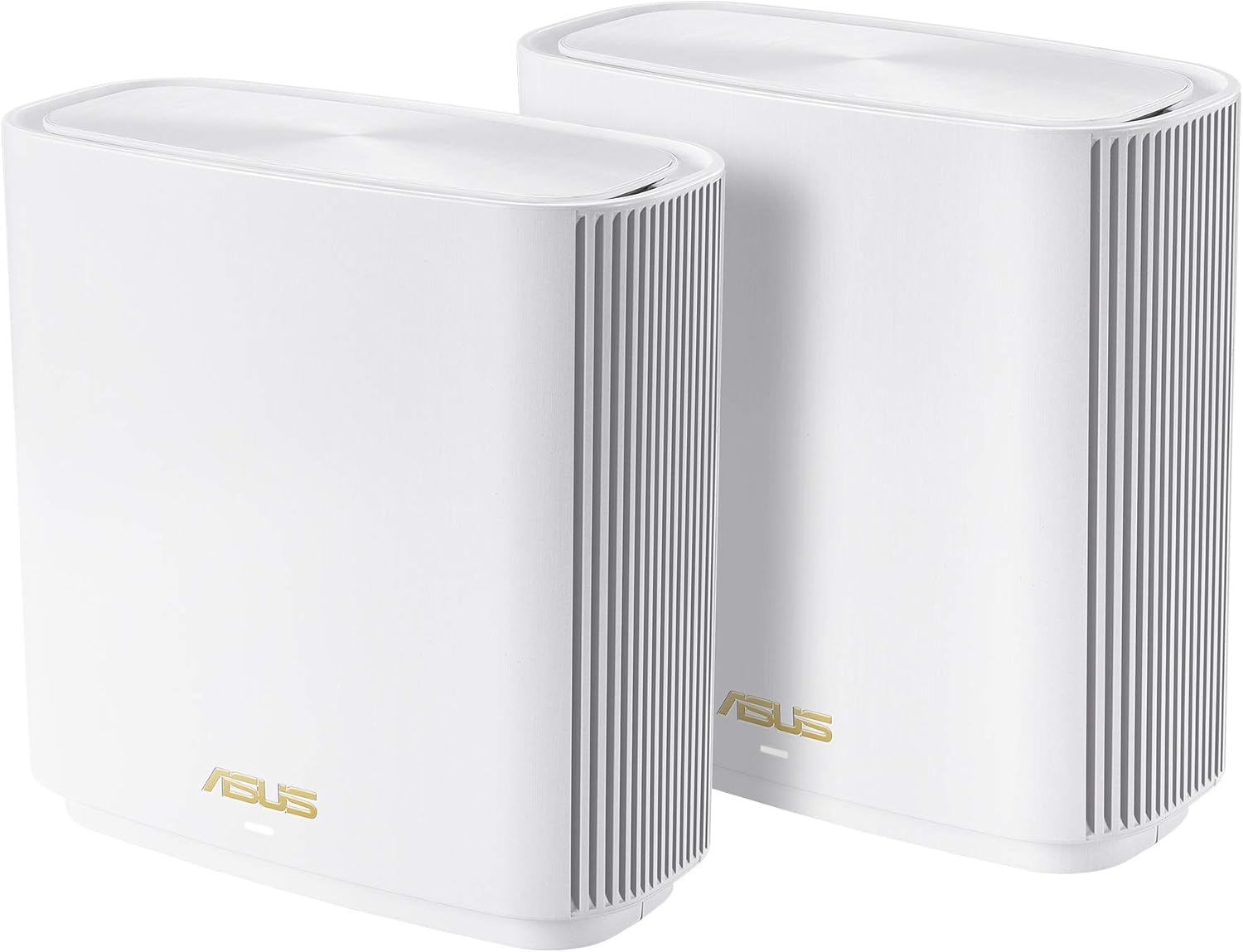
05. ASUS ZenWiFi
 |
| Photo: Amazon.com |
With the pervasive need for high-speed and extensive internet coverage in contemporary times, top mesh WiFi systems have become essential. Asus ZenWiFi Talking about the best in the market, the Asus ZenWiFi system unquestionably deserves special mention.
We dig deep into the features, specifications, setup dogmas, performance, price, and overall advantages and disadvantages of the ASUS ZenWiFi mesh system.
System Specification: ASUS ZenWiFi
ASUS ZenWiFi makes its case from the get-go, showcasing impressive tech specs. Powered by Wi-Fi 6 (802.11 ax), ZenWiFi boasts a robust tri-band system, achieving a maximum speed of up to 6600 Mbps. A standout feature is its capability of covering up to 5500 square feet, perfect for those living in larger households.
ASUS ZenWiFi: Setting It Up
Setting up ASUS ZenWiFi is hassle-free and remarked as quite user-friendly. To get started, users only need to plug in the system, download the ASUS router app, follow the relaxing guide, and the system will be up and running within a few minutes. The app's interface promotes detailed control, enabling functionalities like guest networking, parental controls, and AI protection.
Performance Review: Speed and Coverage
The report on ASUS ZenWiFi's performance commends the maintained high-speed internet and extensive coverage. ZenWiFi lives up to its declared coverage area and proudly provides steady and consistent connectivity. Multiple groups assessed the scenario, ensuring the internet connection remained robust even with considerable reach and when connected to many devices without losing optimal performance.
Price Evaluation
While there's no denying that ASUS ZenWiFi leans toward the pricier range, WiFi enthusiasts can exclusively consider ZenWifi systems for their consistent performance, delicate design, and multitudinal networking features. With a dual-band system starting at approximately $270 and the tri-band version teetering around $450, Asus packs a punch in terms of price and its associated returns.
Advantages and disadvantages
The ASUS ZenWiFi has a list of substantial pros, such as its accelerated speed, surefire coverage, clean, visually appealing design, rich supply of features, easy setup, and amicable ASUS after-sales support.
On the other hand, a few cons include hitting the high notes on its pricing ladder and perhaps excessive mesh power, leading to varied reactions with lower-end devices needing help to negotiate the robust signals effectively.
Balancing and reviewing its price against the extensive and impactful specifications and features, it can be seen that considering ASUS ZenWiFi would undeniably lead to an upgraded and stellar WiFi experience, hailing it as one of the top five promulgating power-packed, unequaled mesh WiFi systems.
How to Choose Your Mesh WiFi System
Understanding fundamental networking can be quite a hassle for the average homeowner. Even more puzzling can be decision-making for multi-node mesh WiFi systems. Breaking the myths and clarifications around mesh WiFi system selection would then call for a non-tech jugaad in terms we can easily make out.
Identify your needs.
Firstly, consider the size of your home, your internet usage, and the number of connected devices. Homes with high-quality streaming or gaming require robust systems. At the same time, small apartments with just a few connected devices might need less substantial WiFi systems.
Research various brands.
Mesh WiFi systems range greatly in brand, price, and performance. Compare online reviews and analyze the features of each brand.
Budget Considerations
Like anything, the price varies by brand and quality. Determine what works best for your budget, but be aware that skimping may have proficient limitations.
Router-System Compatibility
Another important aspect is to ensure that your router is compatible with the system chosen. Some units may require adjustments or hardware updates.
Understanding Specific Needs Based on House or Office Size
When talking about your home or office, it's all about square footage. A basic rule of thumb in choosing a mesh WiFi system is to ensure your coverage matches your house or office size. A single node covers approximately 1,500 to 2,000 square feet.
- A single WiFi router could be enough in smaller spaces (1,500 sq ft or lower).
- Moderate-sized homes (up to 3,000 sq ft) will profit from a two-unit system.
- In homes exceeding 3,000 sq ft, expect to add nodes for each 1,000–2,000 sq ft extra area.
Factoring internet speed
Each node in a mesh wireless system will either match your Internet package speed or not quite fully exploit that speed. Your fiber, ADSL, or cable Internet provider sets this speed seal. Mesh network units with decent standards (like WiFi 5 or WiFi 6) wouldn't generate a substantial speed hump.
- Ensure your mesh WiFi system specifications align with or better than the speed dictated by your internet provider for optimal operation.
Your internet connection can make a difference to productivity, whether at home or in the office. In today's world, having a fast and reliable internet connection is no longer a luxury but a necessity. Today, we will explore how to factor in internet speed and its importance.
Why Internet Speed Matters
Suppose you frequently deal with buffering videos, lagging games, slow downloads, or dropped video chats. In that case, that's an obvious sign you should consider upgrading your internet speed.
- Increased efficiency: faster internet means quicker response times for all your internet-dependent devices. This ensures a smoother operating experience.
- Faultless streaming: Increased internet speeds guarantee smoother video conferencing and flawless music and video streaming.
- Quick downloads: With a faster internet connection, you can download large files in seconds or minutes.
- Responsive gaming: A robust and agile internet connection offers lag-free and super-responsive online gaming.
How to Measure Internet Speed
Measuring your internet speed can be done using online tools like speedtest.net, which calculates your download and upload speeds.
Download Speed
This determines how quickly you receive data from the web to your device. Anything from opening a webpage to downloading movies or music affects your download speed.
Upload Speed
Upload speed defines the pace at which you can send data from your device to the World Wide Web. Activities like video calling, sending emails with attachments, or posting videos or images on social media all utilize upload speed.
How to Improve Your Internet Speed
The simple steps to improve your internet speed often involve something other than technical know-how.
- Check and reset your router; maintain an awareness routine of software updates; or, better yet,
- Eliminate in-house issues that impact your wireless every day.
- In many cases, contacting your Internet service provider for an upgrade could be a matter.
Price-Value Consideration
The balance between the actual value and an item's price is pivotal. Buying marks of quality matters equally as budgeting.
More often than not, paying a little extra for a brand with a reliable reputation pays off in the long run.
Estimating Installation Complexity
Considering your affinity (or lack thereof) for technology, user-friendliness during setup and beyond is significant.
Look for products that offer visual guides or interactive smartphone applications that simplify the initial setup wizard.
Product Support and Longevity
Constant customer service, automatic updates, and the extensiveness of the manufacturer's warranty will point to device lifecycle expectancy.
Consider how long you desire your mesh WiFi system to sustain before you feel inclined to go for successor devices.
Critical Factors in Purchasing Decisions
Product longevity and ongoing support have been rapidly scaling up the ladder of priorities for consumers around the world. Increasingly, they reflect the broader sustainability issues, ethics, and economic value. However, companies often need to catch up to the game, which means what customers want. Let's delve more deeply into how consumers value product support and longevity. The Intangible Connection: Product, Brand, and Consumer
- The relationship is not simply between the consumer and the physical product. There is an intangible bond materialized by after-sales services and committed support.
- A product purchased is not merely a transaction. It is a testimony to the customer's trust in the brand. Long-lasting products and ongoing support serve to consolidate this trust.
Why product longevity is important
Packaging grows old, the fascination wearing off after some time; it's the quality narrated by the longevity that breaks walls in the minds of the consumers. Long-lasting products reduce the need for regular replacements, culminating in financial savings.
- Using a product for a long time is instrumental in reducing waste and promoting environmental sustainability.
- The longevity of a product speaks volumes about brand reliability and trustworthiness, impacting customer loyalty.
Decoding Product Support
While longevity sheds light on the intrinsic qualities of a product, product support flaunts the company's interest in the customer's post-purchase journey. It shows the company's responsiveness to customers' concerns.
- A flattering support scenario is necessary for strengthening reputation metrics.
- It illustrates a company's commitment, guaranteeing trust among users.
Review
Consumers view products as more than possessions; they see them as long-term investments as they sway more toward sustainability, convenience, and efficiency. To achieve this, companies need to ensure that the lifespan of the same and the support rendered both have a qualitative and substantial nature.
As we rapidly adopt digital transformation, product support, and longevity will set consummate purchasing patterns, decision-making, and brand performance. Companies acknowledging and turning their wheels towards satisfying these customer expectations will flourish with profitability, communication, and dedicated customer niches.
Read More: Digital Dive Blog
- Affordable Wireless Outdoor Home Security Cameras 2023
- Top 10 Binoculars for Long Distance Viewing
- Top 10 Bushcraft Gear And Equipment You Should Have
- Top 10 Survival and Emergency Preparedness Kit Contents
- Top 5 Lightweight Tents for Backpacking 2023
- Top 5 Most Popular Inflatable Kayak 2023
- Top 5 Trekking Poles For Outdoor Adventures